Four Types of Diffusers Compared: Which One Is Right for You
They all fill a room with scent. The logic underneath is not the same at all. Understand what each one actually is, and you’ll find the way of using plants that belongs to you.
When you first step into aromatherapy, the headache usually isn’t “which oil should I use.” It’s “which device should I buy.”
Ultrasonic diffuser, nebulizer, oil burner, resin incense — the names sound adjacent and the purposes sound similar, but they work in fundamentally different ways, and each suits a different moment.
This article won’t tell you which is best. It will make all four clear, so that when you choose, you know what you’re choosing.
The four, quickly
Ultrasonic diffuser
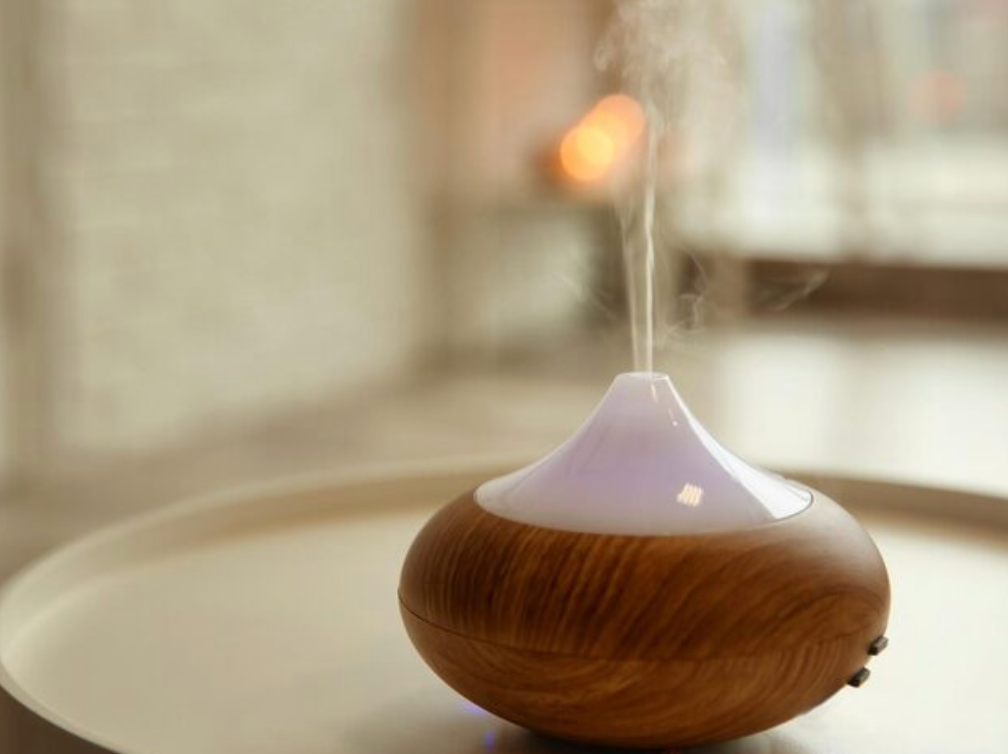
Ultrasonic vibration mists a mixture of oil and water
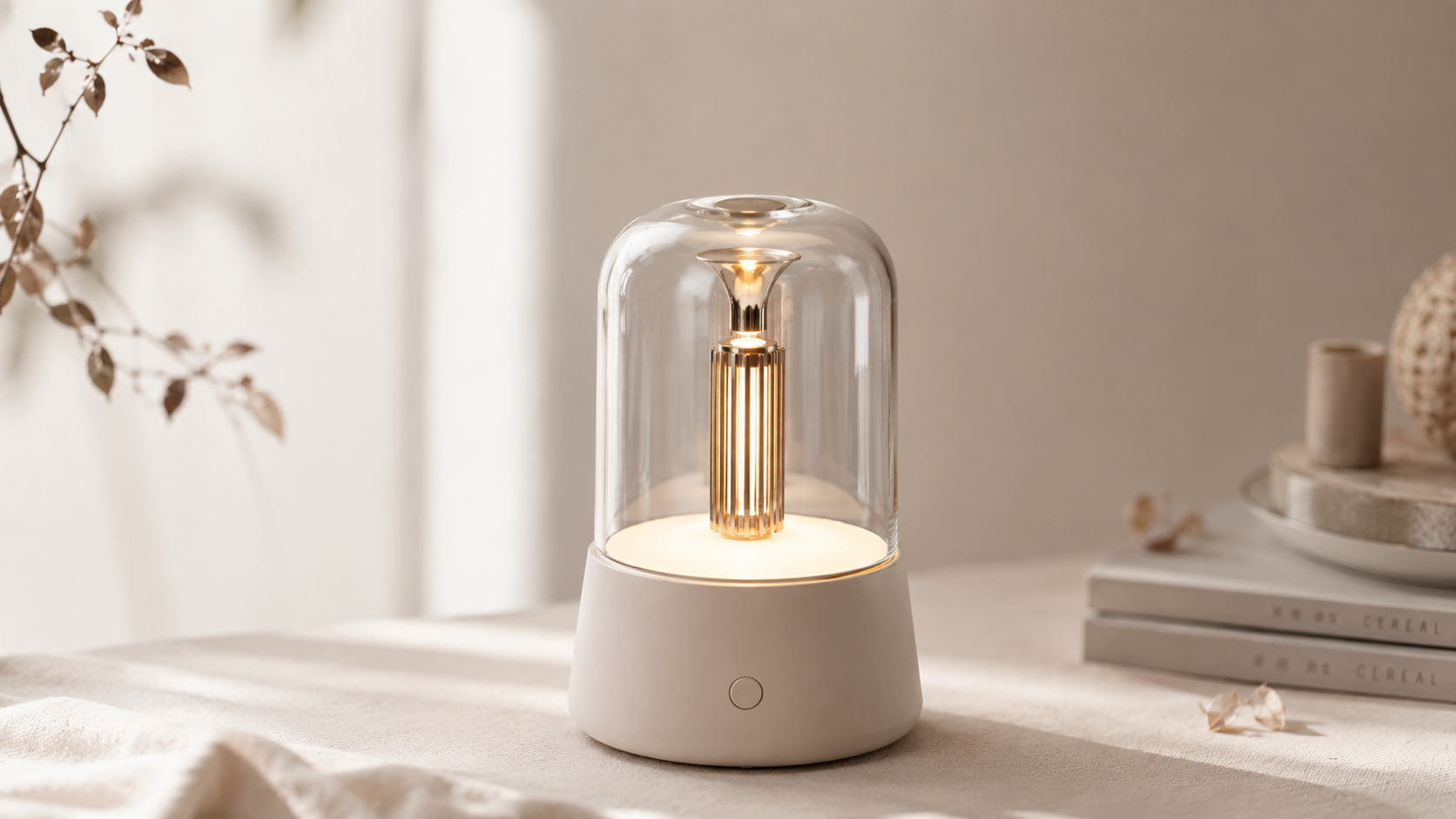
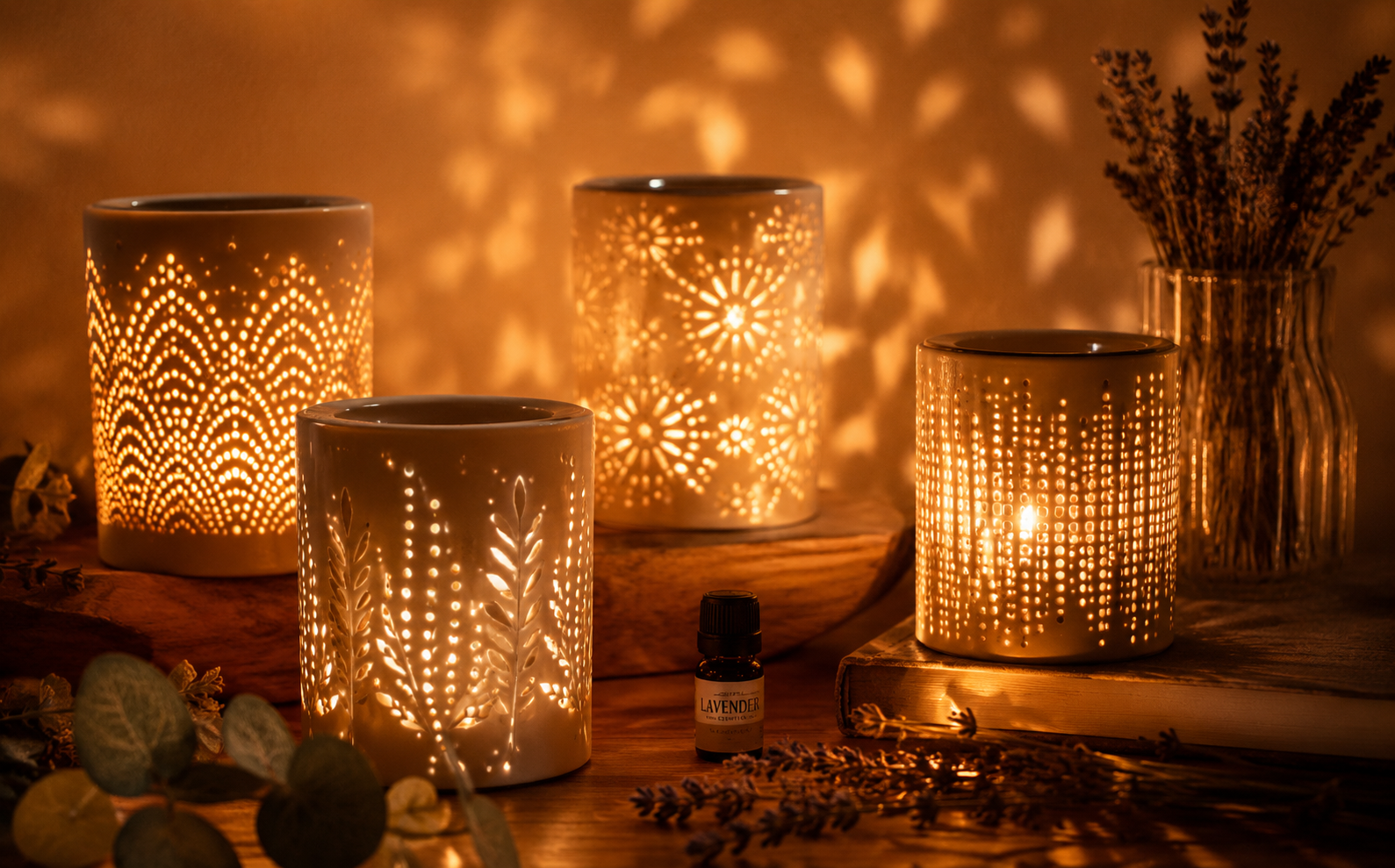
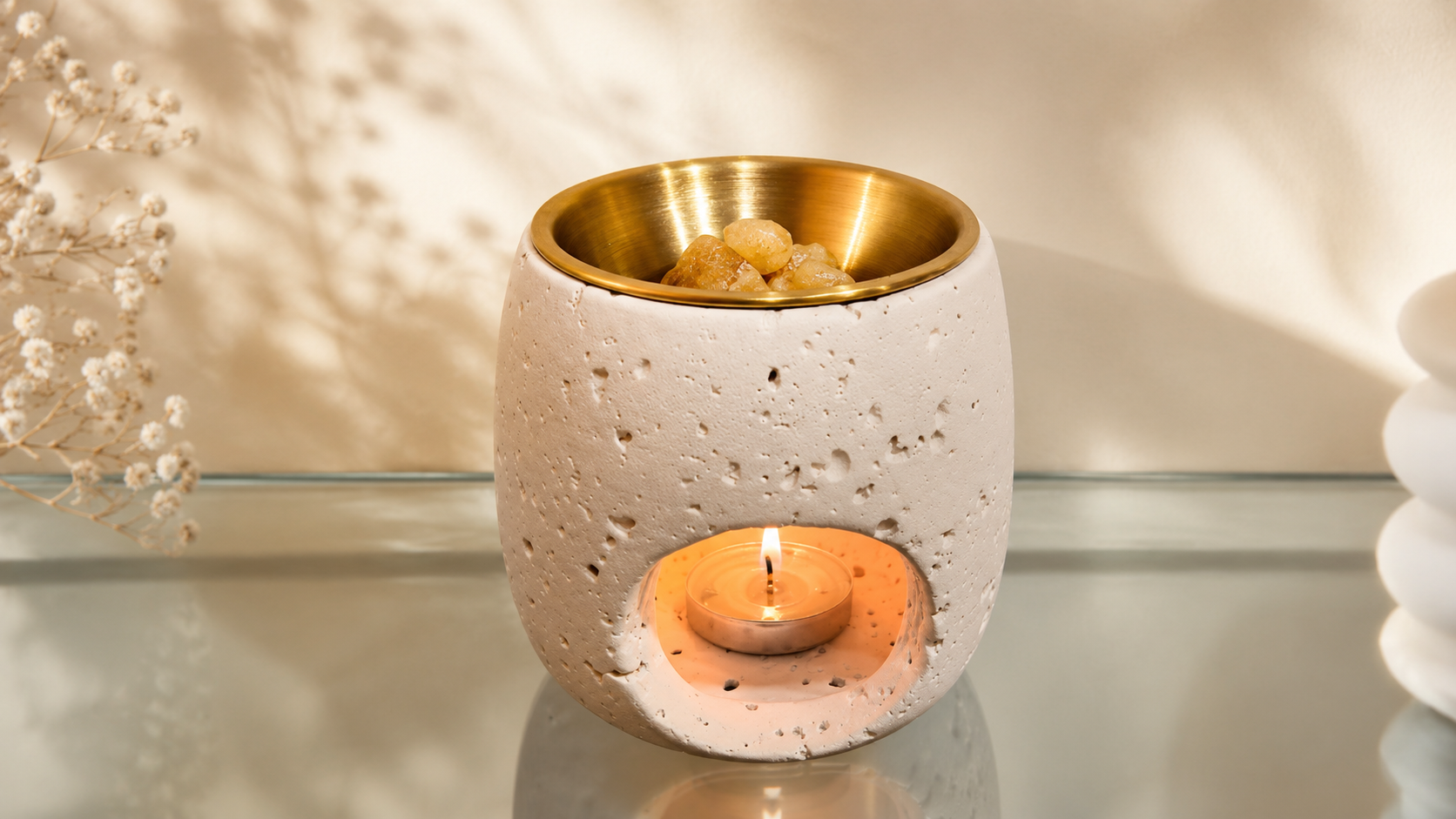
1. Ultrasonic diffuser
The most common way in, and it humidifies.
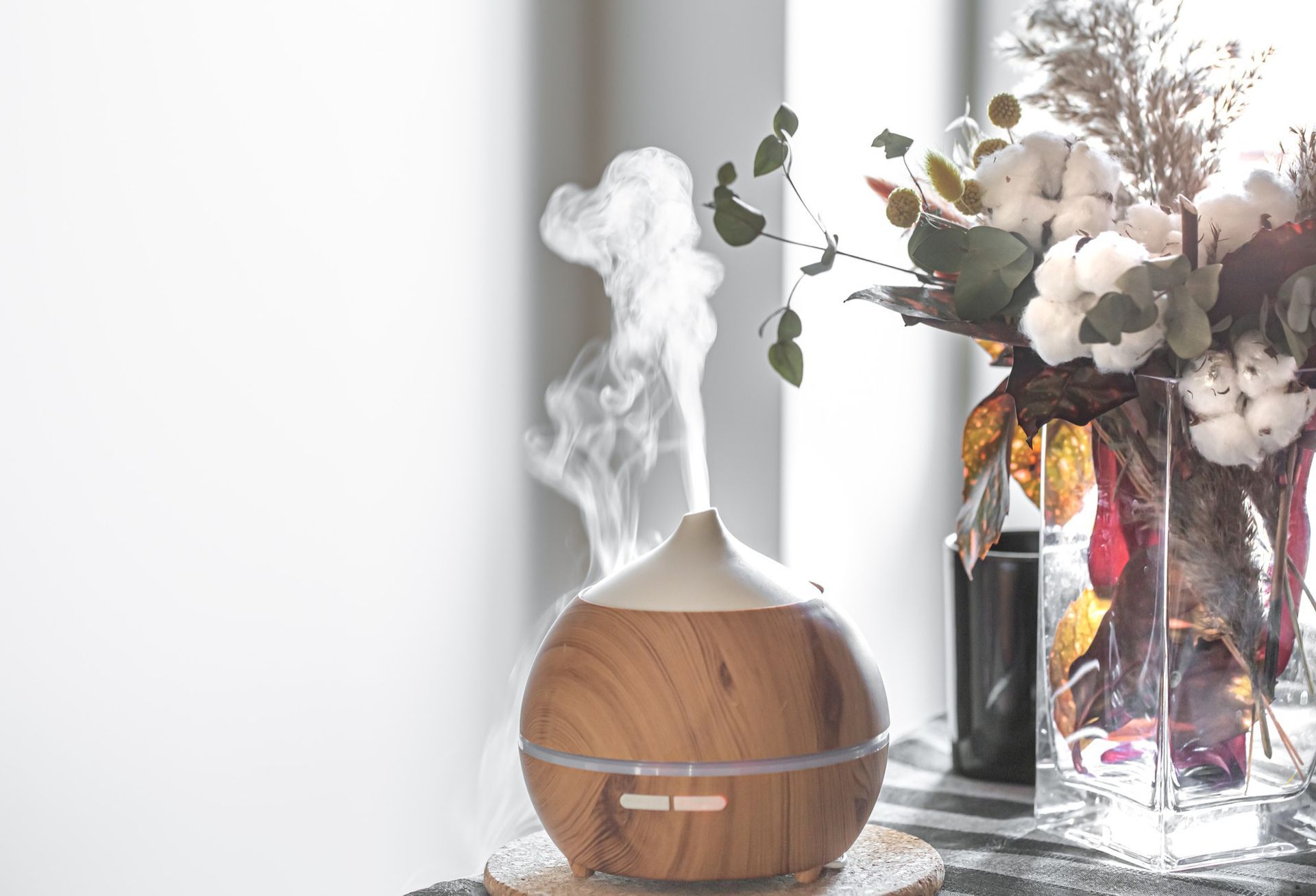
An ultrasonic diffuser vibrates oil and water together into a fine mist that spreads through the room. It’s intuitive to operate, comes in every design imaginable, and is the first device many people own. It also humidifies the air, which is genuinely useful in dry seasons.
What’s worth understanding is that the mechanism dilutes the oil in water before diffusing it, so the effective concentration in the air is lower than with the other methods. If pure aromatherapeutic effect is your goal, that dilution limits what the aromatic molecules can do. The tank also needs regular cleaning — standing water over time becomes a hygiene problem.
Good for - Most intuitive to operate - Humidifies at the same time - Suits long background scenting
Watch for - Oil is diluted in water; lower concentration - Room humidity rises quickly - Motor noise - Water can be knocked over — mind the electrics
2. Nebulizing diffuser
No water. Pure oil, atomised directly.
A nebulizing diffuser (also called an atomising diffuser) needs no water. It turns pure essential oil into ultrafine particles and disperses them into the room. Because the oil is neither diluted nor heated, the structure of the aromatic molecules is preserved more completely. It suits people with higher expectations of what the oil should do.
Worth noting: atomising pure oil uses it up faster than a water-based diffuser, and the glass tube needs periodic cleaning with alcohol to stop oil residue blocking it.
Good for - Oil is neither diluted nor heated - Molecular structure preserved intact - Efficient and even diffusion
Watch for - Pure oil is consumed quickly - Higher overall cost - Atomising tube needs regular cleaning - Harder to clean generally - Motor noise
3. Oil burner
Heat evaporates the oil. Strong atmosphere.
An oil burner uses a candle or an electric plate to heat oil in a dish, so the scent spreads quickly outward. The objects themselves come in every form, and candle versions add the visual warmth of a flame — they have a particular power to shape a room.
From an aromatherapy point of view, high heat alters the chemical structure of some aromatic molecules, weakening their activity. Candle versions also need attention to fire safety throughout, and shouldn’t be left burning unattended.
Good for - Enveloping, rich scent - Candlelight adds a visual sense of ritual - No electricity needed (candle version), and silent - Easy to pick up
Watch for - High heat affects the oil’s aromatic activity — mind the height of the burner and the size of the candle - Oil evaporates faster - Fire safety with candle versions
4. Resin incense
Humanity’s oldest aromatic ritual. Plant wisdom in its original form.
Resin incense is the least known of the four, and also the oldest and the most deeply connected to the plant itself. Before steam distillation existed, the conversation between humans and plant aromatics began here — with resin.
What is resin?
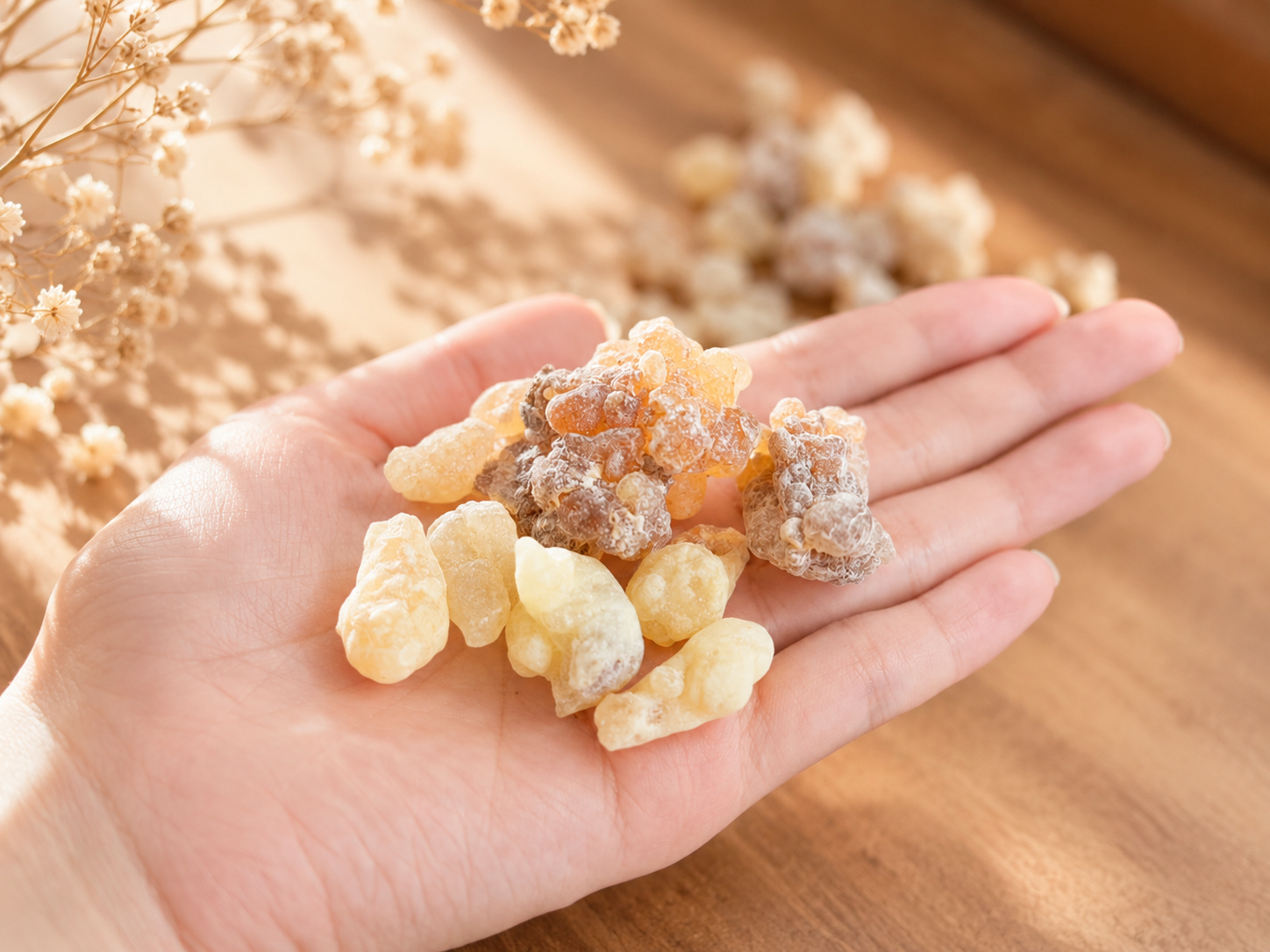
Resin is what a plant slowly secretes from a wound in its bark when it is injured or under stress, and which then hardens. It is how the plant protects itself. The antibacterial and antioxidant aromatic molecules it carries seal the wound and hold off pests and disease. Frankincense, myrrh, elemi and benzoin were all born from the earth this way.
How to use it:
place a small amount of resin on the mica plate or the brass dish of an incense burner, and heat it gently with a charcoal tablet or a candle. As the temperature rises, the solid resin softens just slightly and releases smoke that opens out in layers, carrying a woody scent with the weight of years in it.
Thousands of years of memory
Ancient Egypt · around 3000 BCE The Egyptians used frankincense and myrrh in religious ritual, in mummification, and in medicine, and called them the sweat of the gods. Resin burned all day in the pharaohs’ temples, and the smoke was understood as the bridge between people and the divine.
The Incense Route · around 1000 BCE Frankincense and myrrh were among the most valuable trade goods of the ancient world, worth as much as gold — and temples, ritual and the aristocracy pushed their standing higher still. Arab caravans carried resin from East Africa and the Arabian peninsula across the desert along the Incense Route to the Mediterranean world.
Bethlehem · around 4–6 BCE According to the Bible, Mary conceived by the Holy Spirit and, with no room available, gave birth to Jesus and laid him in a manger. His birth was understood as the arrival of the saviour God had promised, fulfilling the prophecies of the Old Testament. An angel brought the news to the shepherds, and wise men from the East followed a star to bring their gifts: frankincense, myrrh and gold.
Traditional Chinese medicine · from the Han dynasty onward Frankincense (Boswellia) and myrrh (Myrrha) have long been important materials in Chinese medicine, recorded in the Compendium of Materia Medica and used to move blood, disperse stasis, reduce swelling and settle pain. Chinese steam therapy works on the same principle — treating with the aromatic smoke released when a plant is heated.
Ayurveda · the traditional medicine of India
In Ayurveda, frankincense resin has long been used to support the respiratory system and as an aid to meditation. Its Sanskrit name, Shallaki, stands for healing and purification.
Resin and essential oil: one root, two faces
Take frankincense. Frankincense essential oil is distilled from frankincense resin.
Distillation is a filter. Some heavier molecules and the resin acids cannot be carried over in high-temperature distillation, and are lost in the residue.
Resin heated gently at low temperature releases a more complex, more layered molecular composition. Some researchers consider that completeness the core value that separates resin from oil. It is also why frankincense resin and frankincense oil smell so unlike each other — the resin heavier, deeper, carrying a weight that only time deposits.
Good for - Humanity’s oldest aromatic form - The most complete and layered molecular composition - One session lasts a long time - No two uses are ever identical - The deepest sense of ritual; the most settling - No electricity, and nothing to wear out
Watch for - Needs a charcoal tablet or candle as a heat source - Ventilate the room (candle versions) - Fire safety
Which one suits you?
No tool is “the best.” There is only which one fits the rhythm of your life right now, and what you want it for.
Choose an ultrasonic diffuser if you want aromatherapy to sit naturally in the background of the day, need the air humidified at the same time, or like being able to switch something on and forget it.
Choose a nebulizing diffuser if preserving the oil’s aromatic activity matters to you, and you want diffusion that is pure — neither diluted nor heated.
Choose an oil burner if you enjoy the warmth a flame brings, prefer a silent tool, and like the idea of lighting a candle, adding a few drops, and letting light and scent keep you company.
Choose resin incense if you want a stretch of deliberately quiet time, if you’re curious about plants in their original form, or if you want to stand closer to the meeting point between people and plant wisdom, thousands of years deep.
At a glance
| Ultrasonic | Nebulizer | Oil burner | Resin | |
|---|---|---|---|---|
| Principle | Ultrasonic water mist | Cold atomisation | Heat evaporation | Gentle heating of resin |
| Material | Oil + water | Pure oil | Oil | Plant resin |
| Aromatic activity retained | ★★ | ★★★★ | ★★ | ★★★★★ |
| Character of scent | Light | Even | Rich, spreads fast | Rich, layered |
| Sense of participation | Low | Low | Medium | High |
| Needs electricity | Yes | Yes | No (candle version) | No |
| Maintenance | Clean the tank regularly | Clean the tube regularly | Low; wipe the dish | Low; easiest while still warm |
| Age of the method | Modern invention | Modern invention | Recent | Thousands of years |
These four are not mutually exclusive. Choosing differently depending on the time and the state you’re in — that is aromatherapy at its most natural and most lived-in.
Scent was never only scent.
It is the language a plant leaves in the air. It is the afternoon you decided to stop. It is a quiet agreement between you and the natural world. What you choose isn’t just a device — it’s the kind of quiet you want.
見聞隨筆更多文章