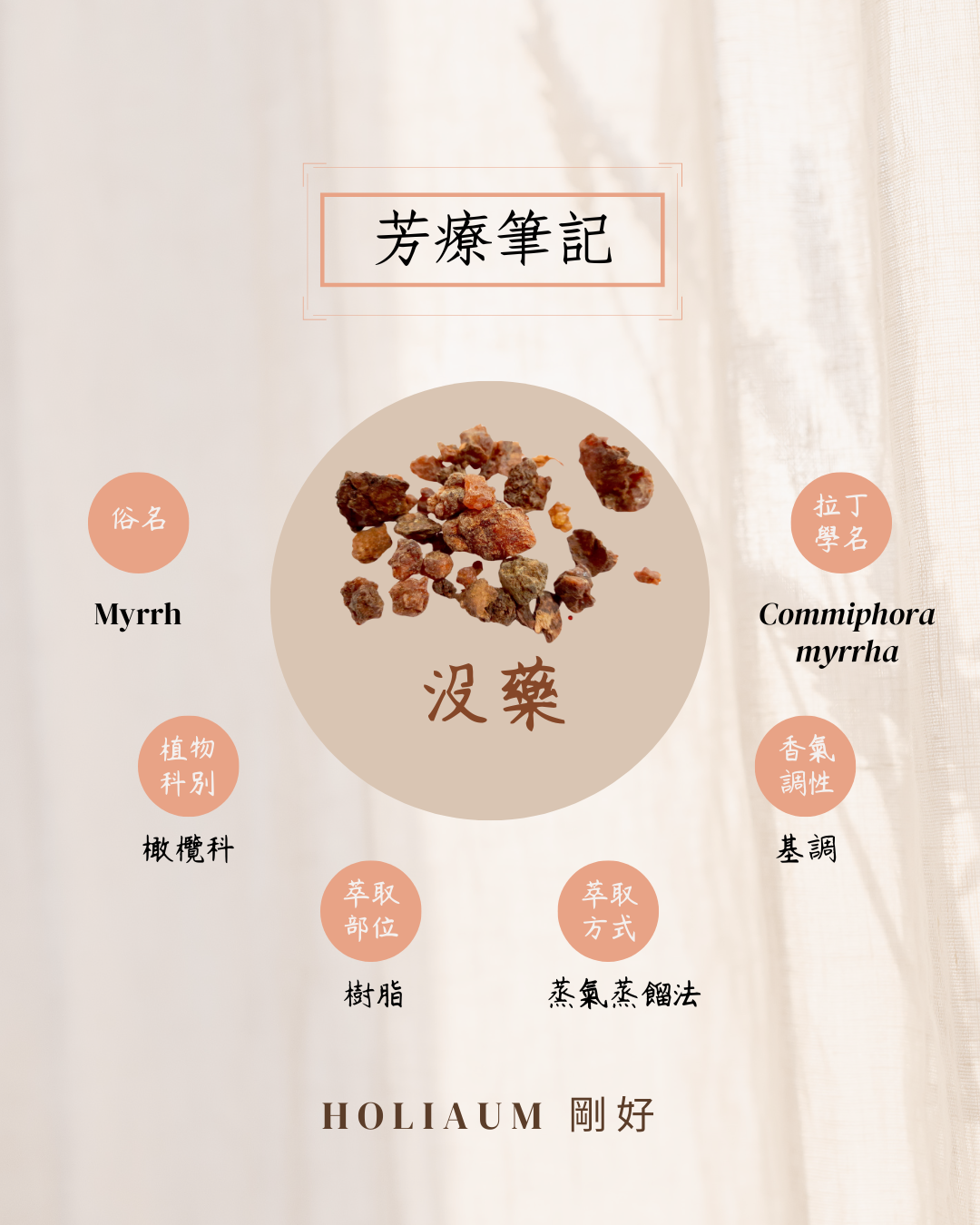
Myrrh
I was working when I suddenly realized I didn't know what I was doing.
It wasn't fatigue, but a sudden sense of disorientation.
My body is here, but my mind has wandered off somewhere else.
Have you ever felt this way?
At times like these, I'll take some myrrh. It helps me gather my scattered thoughts and find myself again.
Its aroma is like time standing still.
It was a smoky aroma carrying the warmth of the earth, rich yet not oppressive.
It's as if someone gently says to you, "You're back, you're here."
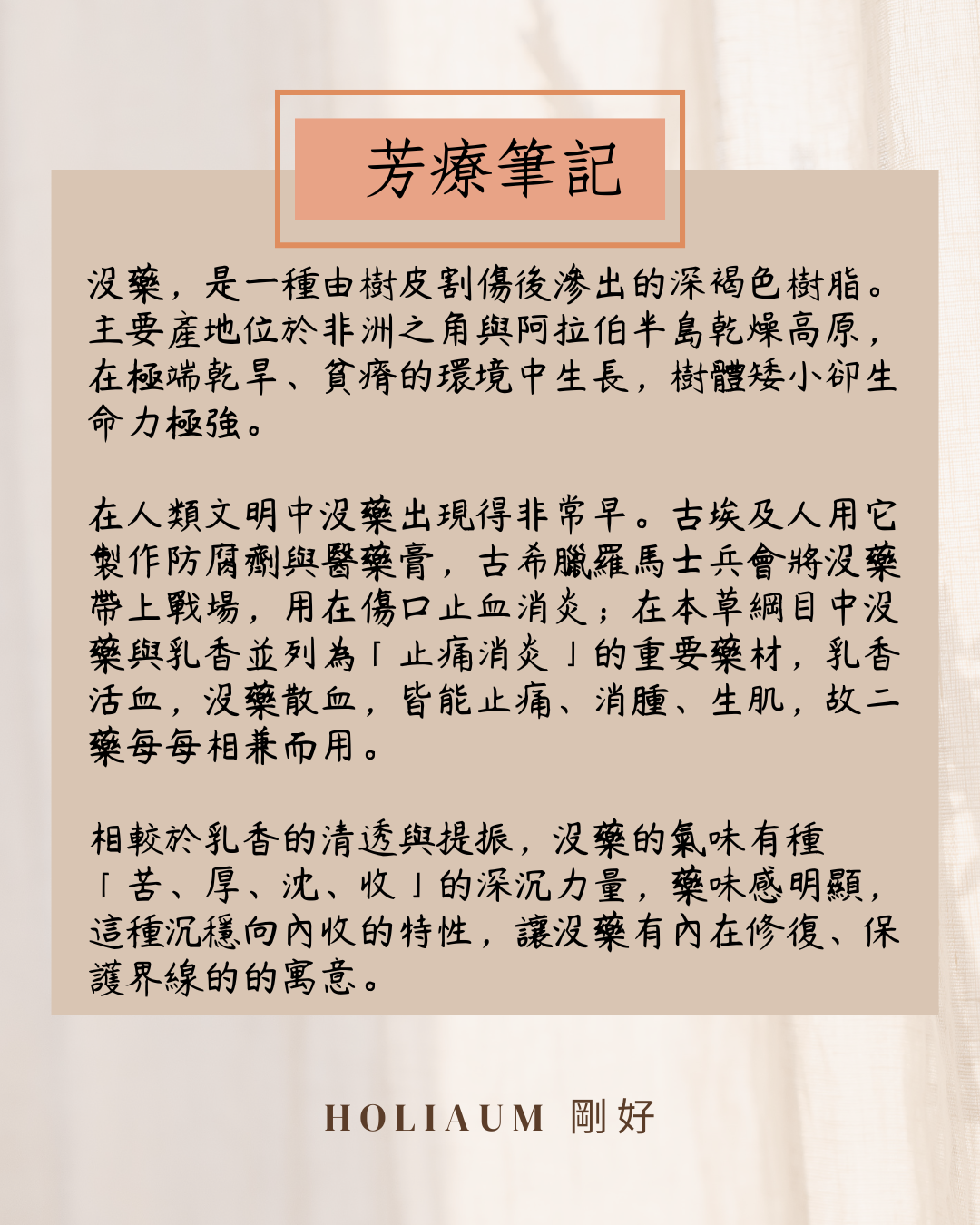
Myrrh has existed in this world for thousands of years.
Ancient Egyptians used it to purify the space, ascetics used it to calm their minds, ancient Greek soldiers used it to stop bleeding and reduce inflammation, and traditional Chinese medicine used it to disperse blood stasis and calm the mind.
Myrrh is derived from the resin of the Burseraceae plant *Commiphora myrrha*, extracted using steam distillation. Its aroma is a calm and warm base. It possesses antibacterial, anti-infective, and soothing properties, and is commonly used for wound healing, treating cracked skin and chronic pain. It can also help improve dryness, roughness, and mature skin problems.
Myrrh appeared very early in human civilization. Ancient Egyptians used it to make preservatives and ointments, and ancient Greek and Roman soldiers would take myrrh to the battlefield to use it to stop bleeding and reduce inflammation in wounds. In the Compendium of Materia Medica, myrrh and frankincense are listed as important medicinal materials for "analgesia and anti-inflammation". Frankincense promotes blood circulation, and myrrh disperses blood stasis. Both can relieve pain, reduce swelling, and promote tissue regeneration. Therefore, the two medicines are often used together.
Compared to the clarity and invigorating properties of frankincense, myrrh has a deep, bitter, heavy, and astringent aroma with a distinct medicinal quality. This calm and inward-looking characteristic gives myrrh the connotation of internal repair and protection of boundaries.
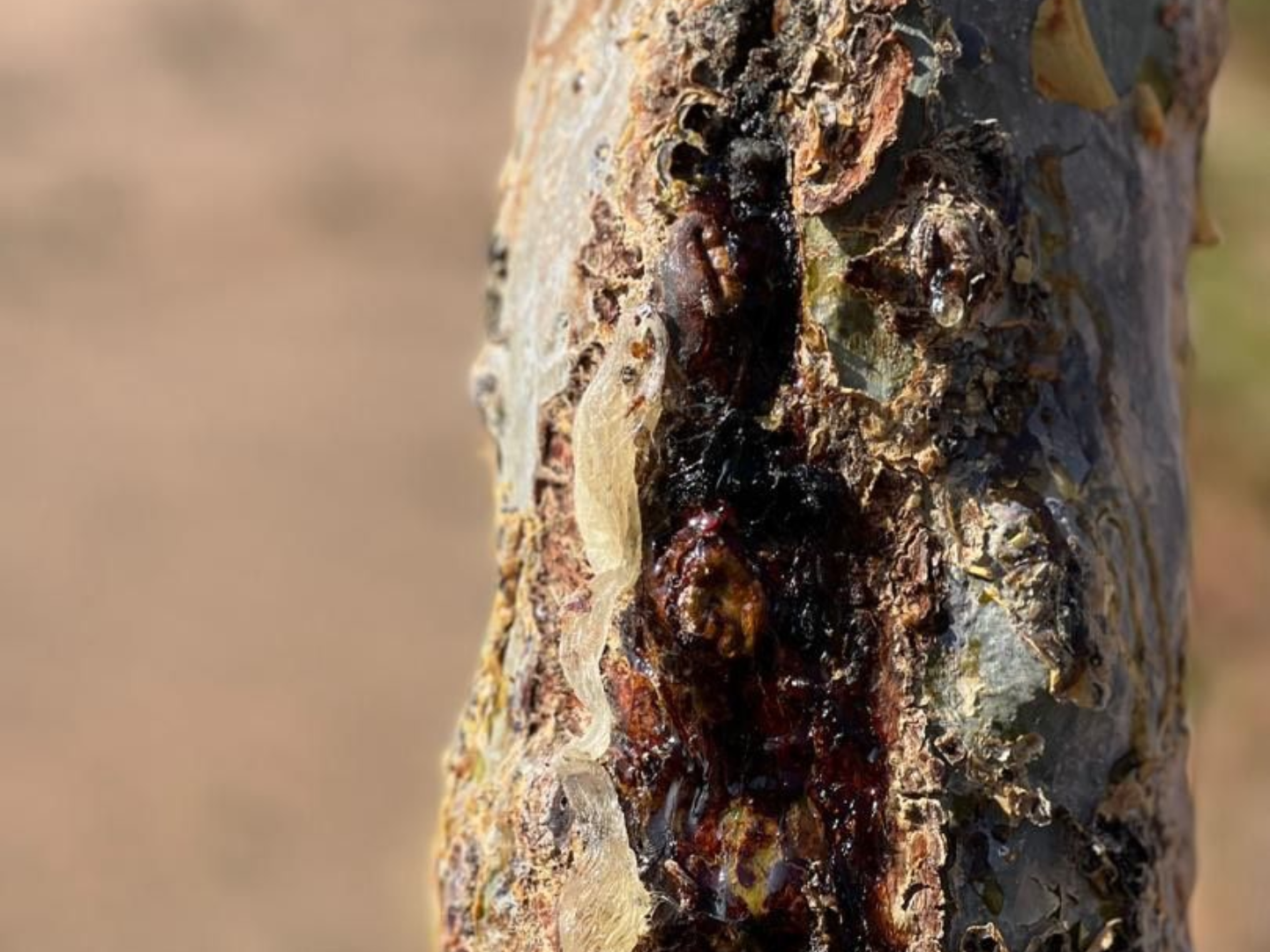
Myrrh's main functions:
1. Antibacterial and anti-infective properties: Rich in sesquiterpenes and sesquiterpene alcohols, it possesses antibacterial and antifungal properties. Traditionally used for the treatment and care of wounds, ulcers, oral and skin infections.
2. Pain relief and relief of chronic inflammation discomfort: In traditional Chinese medicine and modern pharmacology, myrrh is regarded as a "blood-activating and pain-relieving" resin, which is particularly suitable for relieving joint stiffness, old injury pain and chronic inflammation.
3. Wound healing: Relieves tinea, skin ulcers and sores, and improves oozing wounds and cracked skin.
4. Deeply repairs skin, suitable for mature skin: promotes tissue repair, improves dry, rough and aging skin conditions, and reduces wrinkles and scars.